Turning Costa Rica's food waste into feed, fuel & fertilizer.
NutriTicos gives small Costa Rican farms access to animal feed at the same price big commercial operations pay — without a single bag of imported corn or soy. We collect food waste from hotels and restaurants, render it into protein meal, and deliver it to the farmers who need it most.
Costa Rica imports 100% of its corn and soybeans. By the time those bags reach a small farmer's agroservicio counter, the protein inside costs 2–3 times the global price — freight, import duties, processing margins, and taxes all stacked on top of each other. Large commercial operations avoid this markup by buying raw materials and mixing their own feed. Small farmers can't. That gap isn't negotiable. It's structural.
NutriTicos doesn't offer a discount. We eliminate the markup entirely by processing Costa Rica's own waste streams — food scraps from hotels and restaurants, fish waste from the Quepos corridor, and agricultural byproducts from the region — into rendered meal at the same effective cost that large commercial operations pay per kilogram of protein.
Our feedstock comes from Costa Rica's own kitchens. As long as Costa Ricans eat, we have raw material.
Based in Uvita, Puntarenas, in the heart of Costa Rica's Southern Pacific corridor, our plant processes 10 MT of waste per day into products farmers actually need.
The closed-loop system fits on 245 m² — half a percent of a 5-hectare coffee farm. Everything else stays in production.
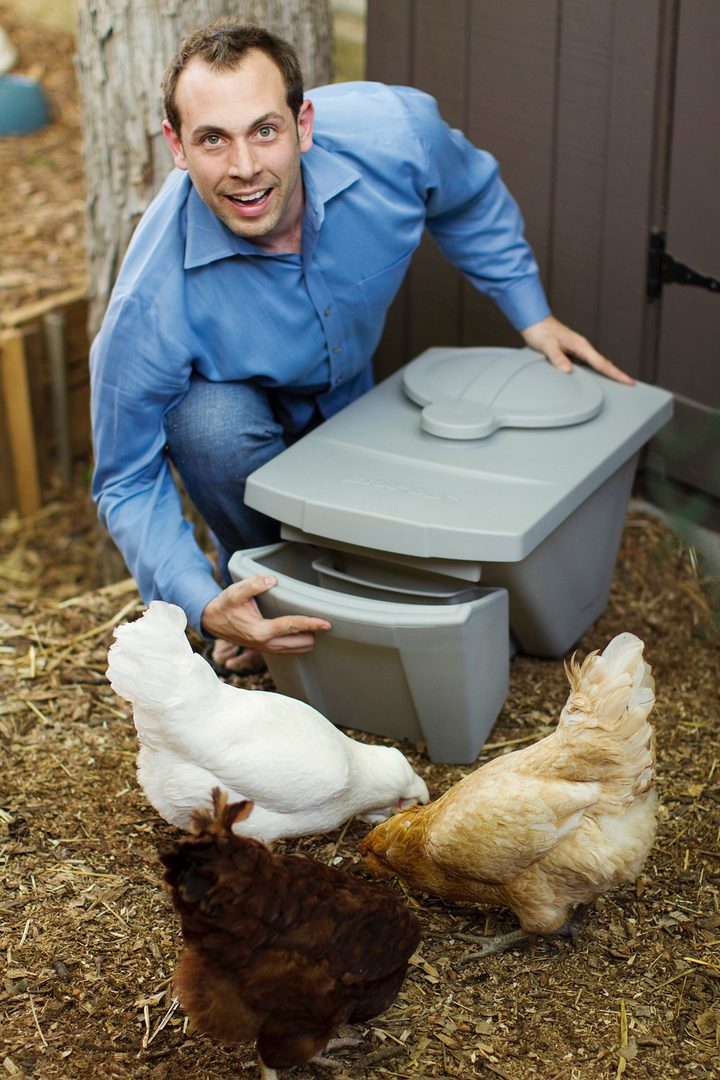
Robert is the inventor of the BioPod — the world's first commercially available Black Soldier Fly cultivation unit — and coined the term "grub composting." He founded GrubTubs in Austin, Texas, collecting food waste from 100+ restaurants and converting it into affordable protein for local family farms.
GrubTubs won the WeWork Creator Awards ($360K) and the SXSW Accelerator, raising over $1M before hitting a Texas regulatory wall on food-waste-derived livestock feed. That dead end became the seed of NutriTicos — this time in a country without that prohibition, with abundant agricultural byproducts and surplus industrial steam.
His father, Dr. Paul André Olivier, designed the original self-contained BSF units, filed foundational patents, and developed the TLUD gasifier technology behind NutriTicos's pellet fuel platform. The BioHive (BioBrocal) — an open-source brick-circle BSF unit — was built at the Yachana Foundation in Ecuador's Amazon in December 2024.
NutriTicos is looking for feedstock partners (restaurants, hotels, fish processors), farm partners, investors, and regulatory allies. Based in Uvita, Puntarenas, operating throughout the Southern Pacific corridor.